
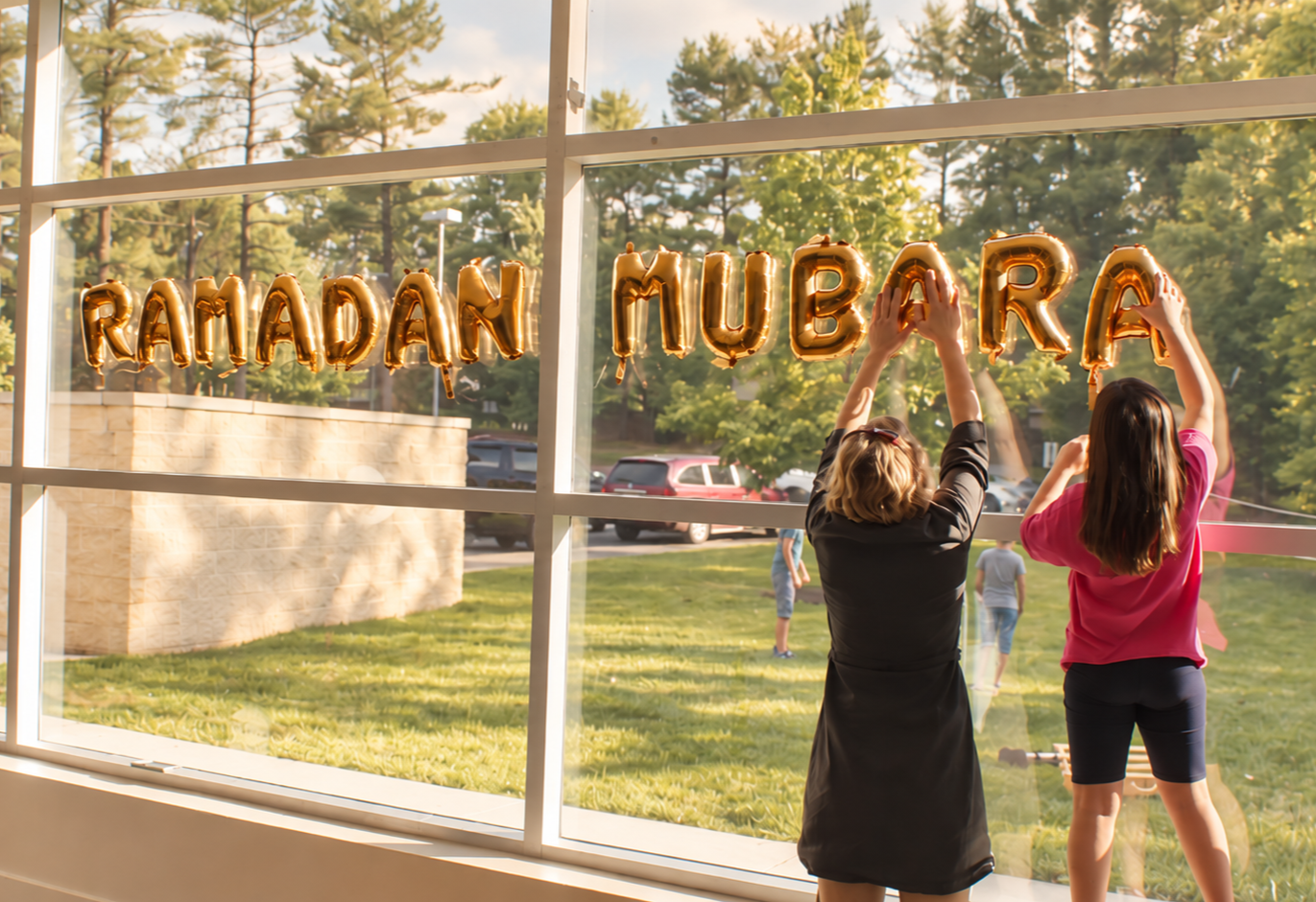
Ramadan at NWMI
Ramadan is a special time for renewal, growth, and deep spiritual reflection. Our programs aim to bring the community together in meaningful ways throughout the month. Learn more about how we commemorate this holy month below.
RAMADAN 2027 PROGRAMS
Coming soon!
ZAKAT AL-FITR
Zakat-al-Fitr, or fitrana, is an obligatory offering to the needy that is given at the end of Ramadan. The head of a household is expected to give fitrana for each member of his/her household before the start of Eid Salat. The amount of fitrana for each individual is the equivalent of one meal, or approximately $12 per household member.
Each year NWMI collects fitrana and forwards it to a worthy recipient. This year NWMI is looking to identify ways to support Muslims that are suffering from conflict imposed famine. We will update this page with more information as we make our selection.

Your Zakat-al-Fitr donation is 100% tax-deductible.
Tax-ID
45-2984068

EID SALAT
NWMI performs Eid salat based on the Ja'fari school of thought. Eid salat is comprised of 2 rak'as and proceeds similarly to Fajr salat with several exceptions.
-
Salat should be performed after sunrise but before Dhuhr salat.
There is no adhan or iqama; instead, "as-salat" is called 3 times to signal its start
The intention is for "salat-al-Eid"
In the 1st rak'a, after reading al-Fatiha it is customary to read A'la (#87) or Shams (#91)
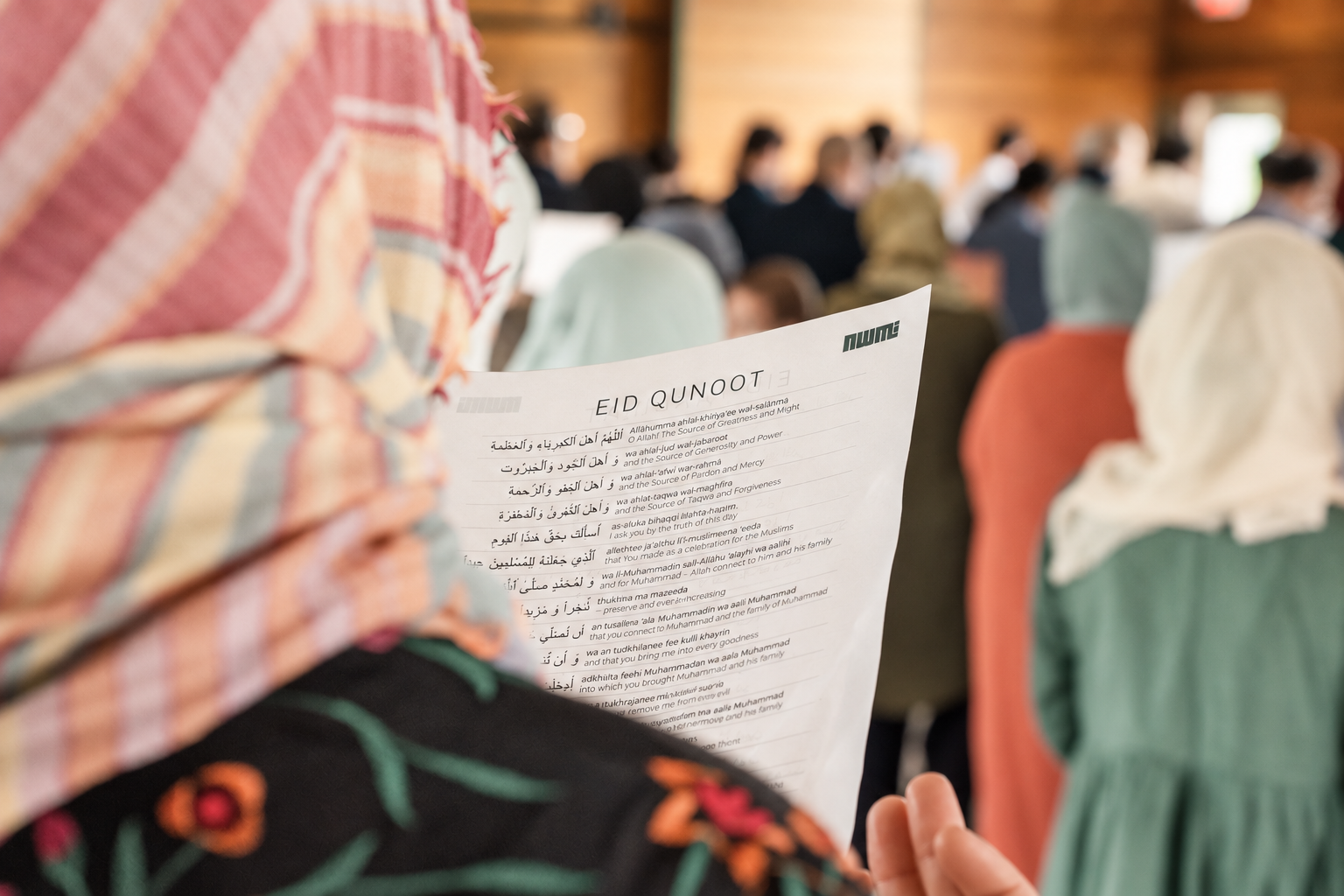
Takbir (calling 'Allahu akbar') occurs 5 times, with recitation of a qunoot (see below) after each takbir.
After a 6th takbir, the 1st rak'a proceeds as usual.
In the 2nd rak'a, after reading al-Fatiha it is customary to read Shams or Ghashiya (#88)
Takbir occurs 4 times, with recitation of a qunoot after each takbir
After a 5th takbir, the 2nd rak'a proceeds as usual to the end
Following the end of salat, a sermon (khutba) is delivered in 2 parts when in congregation
Download a copy of the customary qunoot in Arabic with English transliteration and translation below.


MOON SIGHTING
HOW NWMI DETERMINES THE START OF A LUNAR MONTH
After lengthy deliberations over the merits of each system for determining the start of lunar months, NWMI has decided to adopt the Common Night criterion for two reasons:
There is consensus within NWMI that the crescent moon should be physically sighted, and
The Common Night criterion most closely reflects NWMI's vision of a diverse Ummah, allowing us to be informed by verified sightings from fellow Muslims across continents.
NWMI consults sightings from around the globe as reported on such websites as www.moonsighting.com and www.crescentwatch.org.
Adoption of the Common Night criterion does not mean that NWMI follows the rulings of a single jurist (marja'). NWMI is comprised of a variety of Muslims with varying preferences in matters of jurisprudence (fiqh). NWMI respects each individual's personal choices in these matters and regards such differences as a reflection of the diversity of the Muslim Ummah.
As for Eid-al-Adha, NWMI celebrates with the hajjis and holds salat on the day after they stand at Arafat.